





How quickly can MWS deploy to a wildfire incident?
MWS offers rapid nationwide deployment from the time of activation. Our dispatch team is on call 24/7, and pre-staged equipment and partner network allow us to roll trucks within hours for incidents across the country. For high-complexity incidents, we coordinate directly with your logistics section to sequence arrivals around ICP setup.
What areas do you cover?
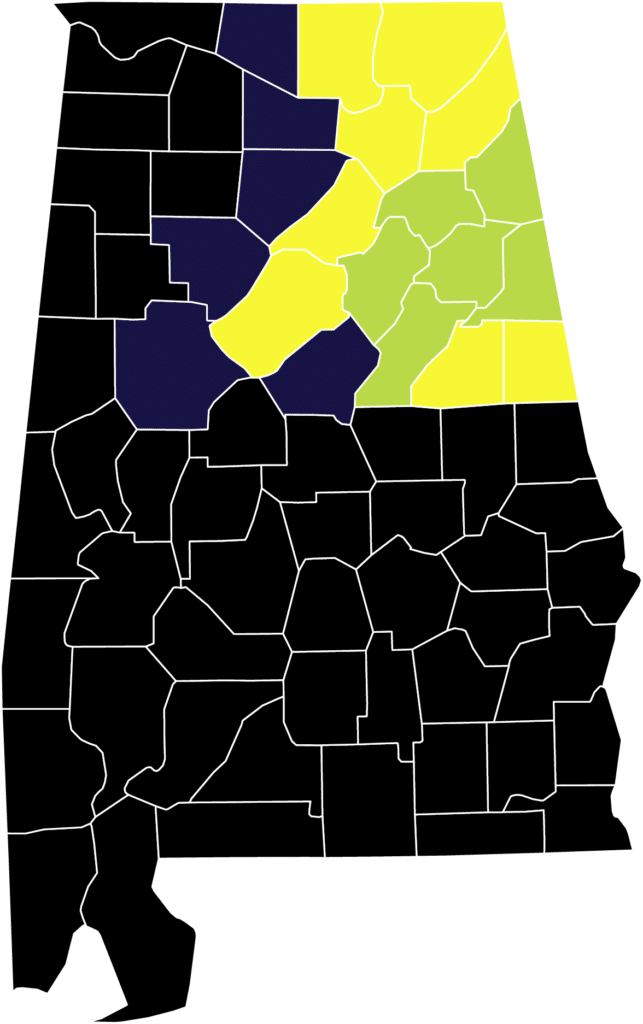
We provide nationwide wildfire response coverage across the United States, including the Southeast, the West Coast, the Mountain West, and the Pacific Northwest. We routinely cross state lines under mutual aid or EMAC activations and can mobilize regional crews and equipment to wherever the incident is staged.
Do you operate 24/7?
Yes. Our emergency line is staffed around the clock, and field servicing (pump-outs, water refills, waste hauling, generator fueling) runs day and night for the duration of the incident.
What equipment do you provide for wildfire base camps and fire camps?
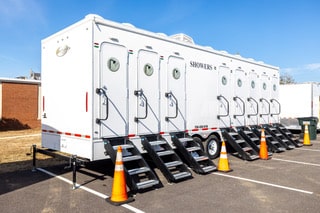
- Shower trailers (multi-stall, with hot water and on-board tanks)
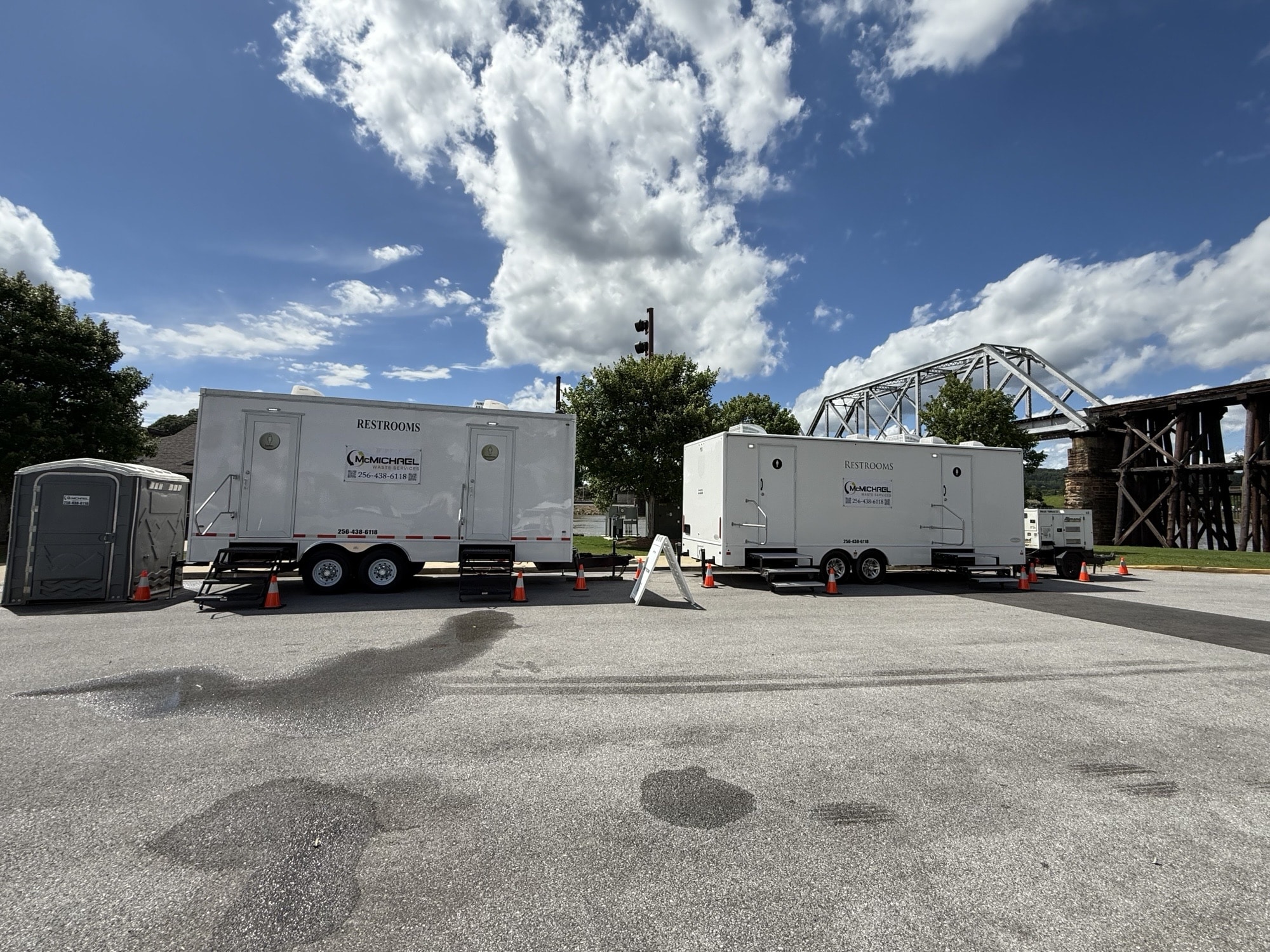
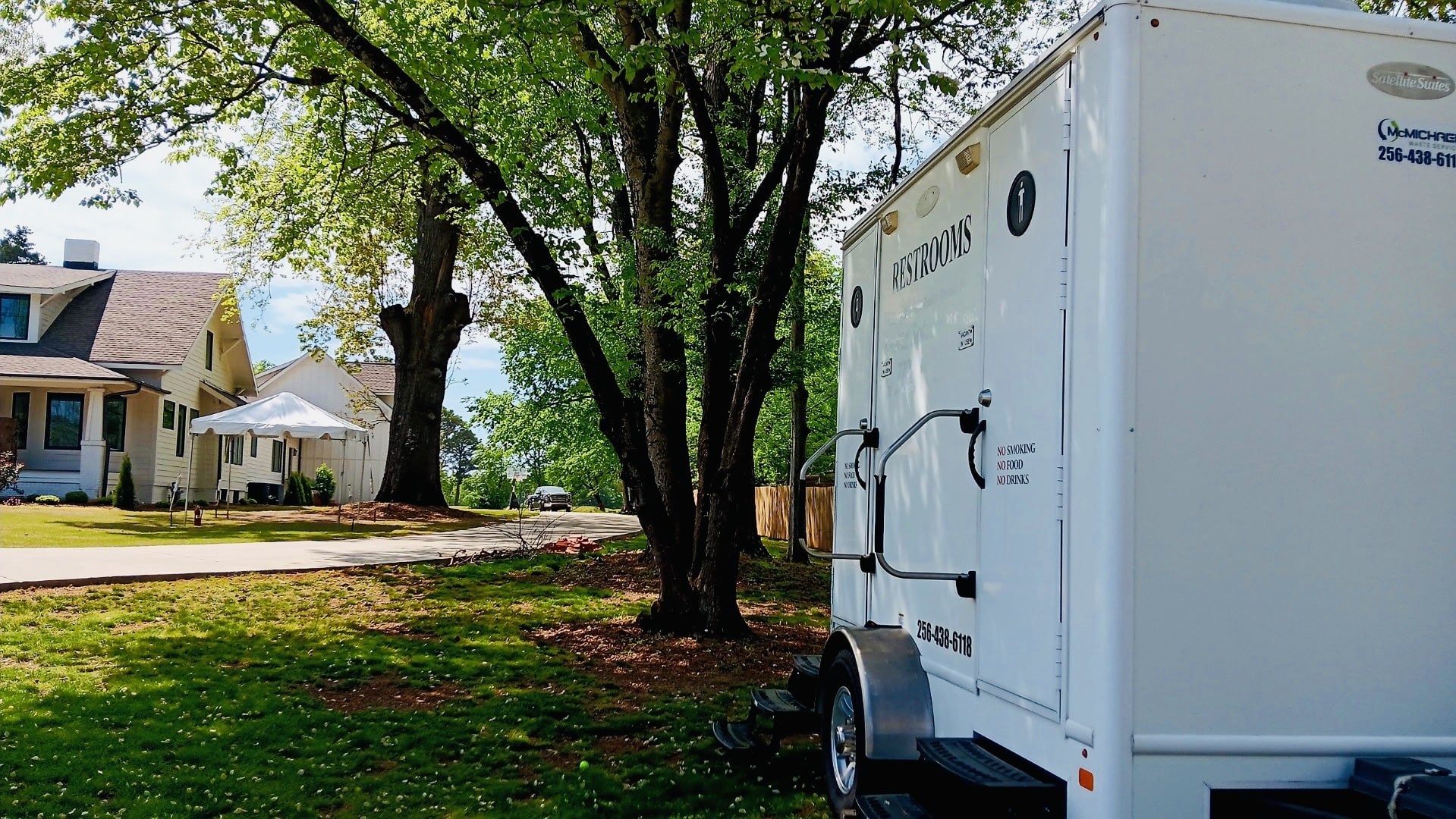
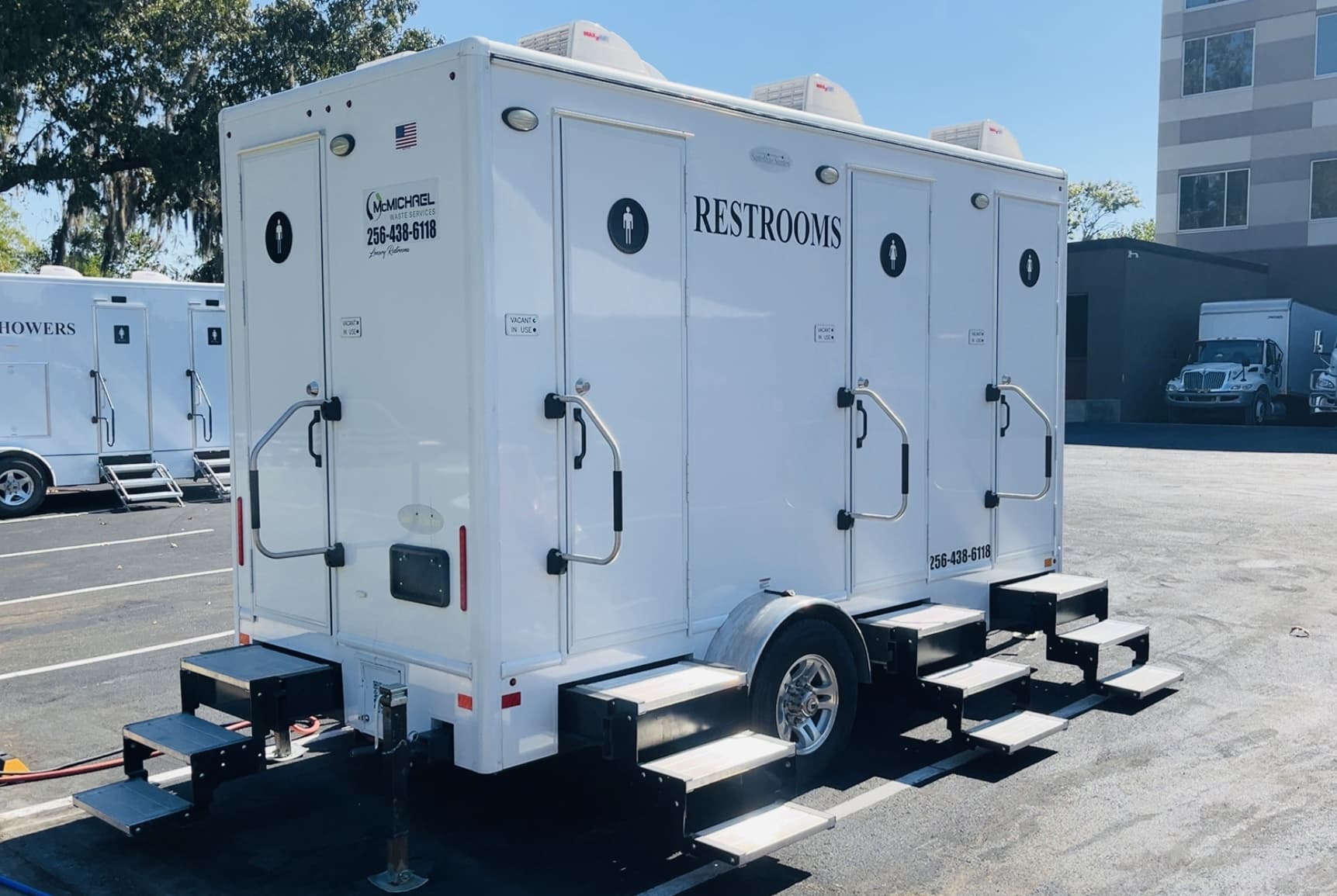
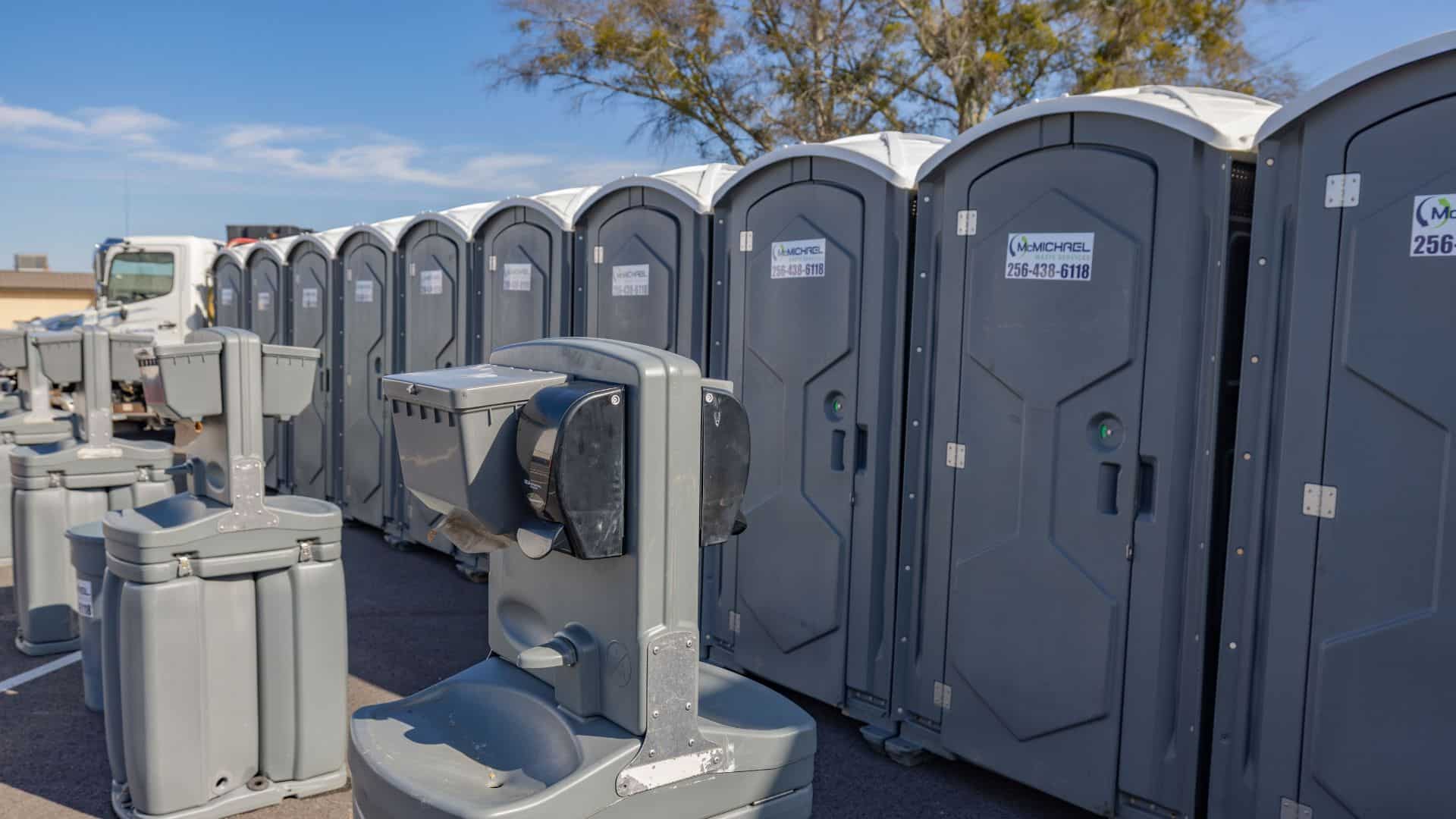
- Restroom and handwash trailers
- Portable toilets
- Bunk and sleeper trailers for crew rest
- Laundry trailers
- Potable water delivery and gray/black water service
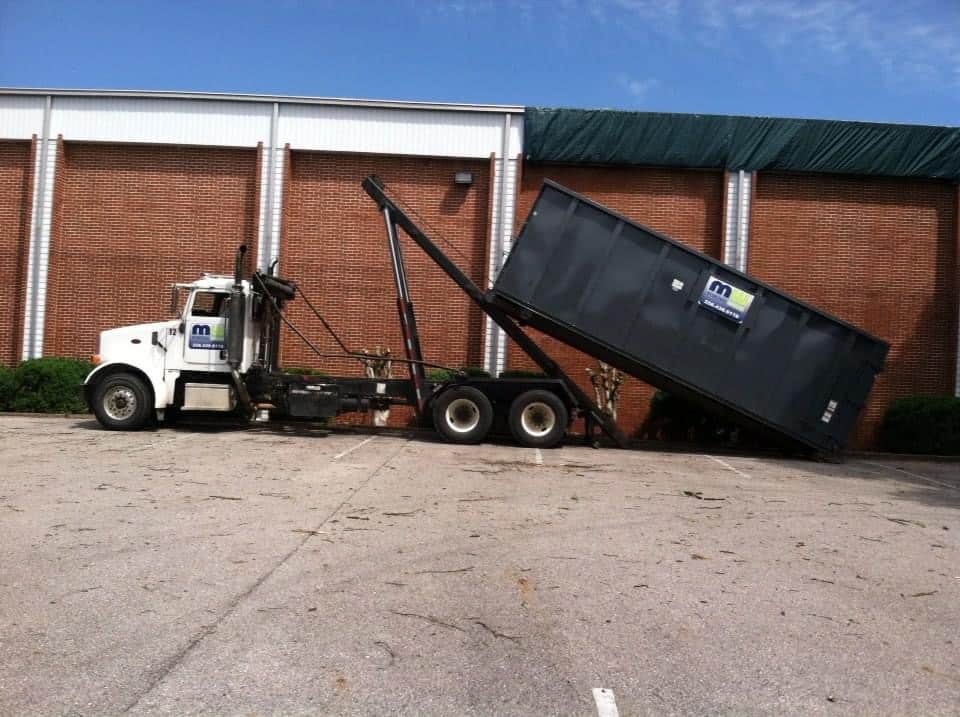
- Roll-off dumpsters and front-load containers for solid waste
- Office and command trailers on request
- Light towers, generators, and fuel service through our partner network
How many personnel can your fire camp infrastructure support?
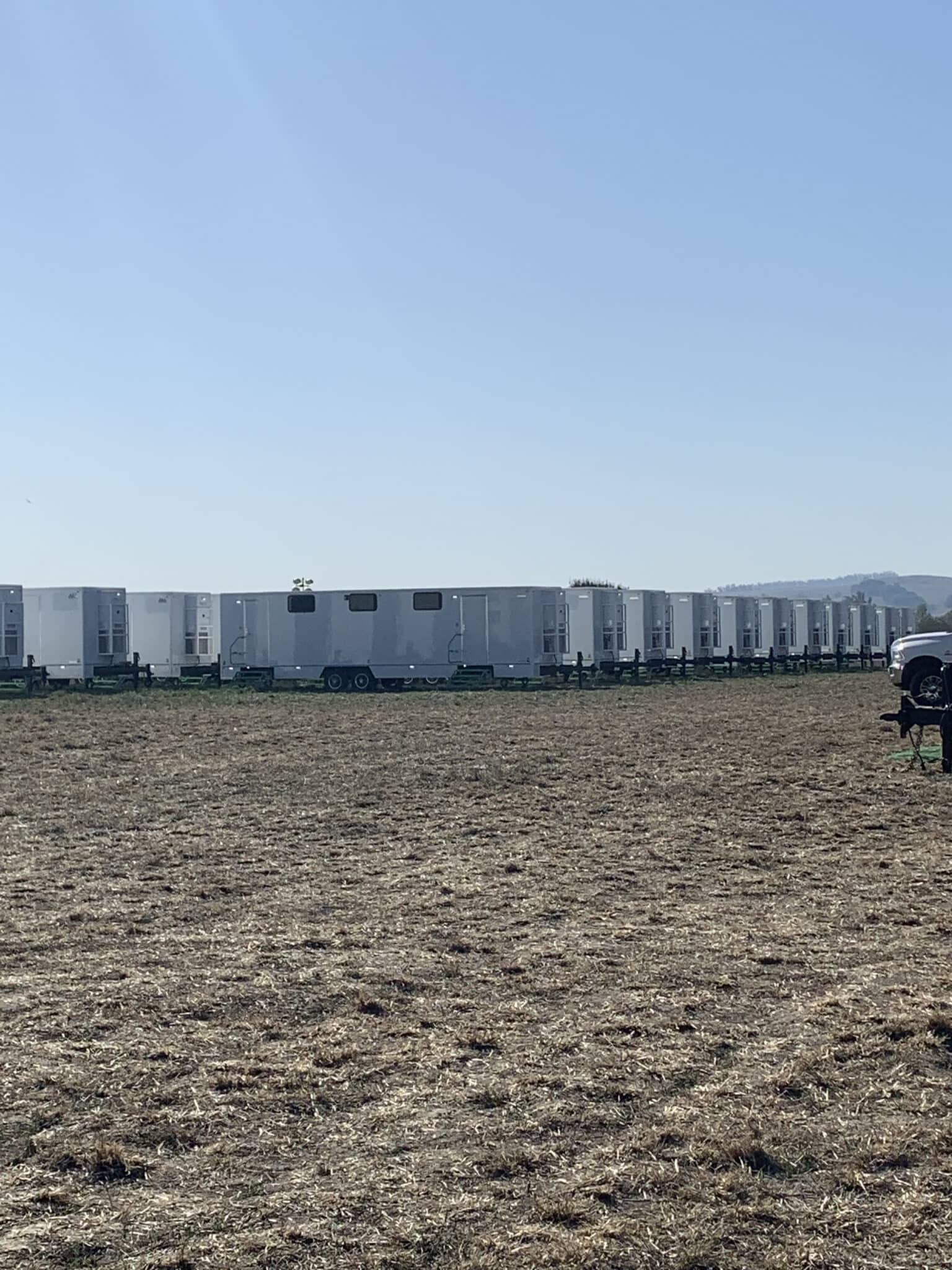
A single shower trailer typically serves 75 firefighters per rotation, and our bunk trailers sleep 16 personnel per unit. We scale camps from 25-person spike camps up to 1,000+ person Type 1 incident base camps by combining units. Tell us your projected crew size and we’ll right-size the package.
Are your trailers self-contained for remote deployments?
Yes. All shower, restroom, and bunk trailers are equipped with on-board fresh and waste water tanks, climate control, and can run off generator power. Typical runtime between service intervals is 24 hours, after which our service techs return for pump-outs and refills.
Is your equipment compliant with NWCG and agency standards?
Our wildfire support equipment is built and maintained to meet NWCG resource typing standards and the specifications used by state forestry agencies and federal land management agencies nationwide. Documentation is available on request for agency procurement files.
Do you provide ongoing servicing during an incident?
Yes. Every deployment includes scheduled servicing — wastewater pump-outs, potable water refills, dumpster swaps, consumables restocking (toilet paper, soap, towels), and on-site technician support. Service frequency is built into the contract based on crew size.
Can you scale up if the incident grows or another fire ignites nearby?
Absolutely. We maintain surge capacity in our own fleet and have established partnerships with vetted vendors across the country, so we can add trailers, dumpsters, and water service mid-incident without a gap in coverage.
Can you operate at remote or off-grid locations?
Yes. We routinely deploy to staging areas with no utility hookups, from southeastern pine forests to western mountain and high-desert terrain. We bring generator power, water trucks, and waste haul vehicles, and our drivers are experienced with limited-clearance forest roads, unpaved access, and rugged backcountry routes.
Who do you typically work with?
We support state forestry and wildfire agencies nationwide, federal partners (USFS, BLM, BIA, NPS, FWS), county and municipal emergency management, electric utilities, Type 1 and Type 2 incident management teams, and private wildland fire contractors.
Do you accept agency contracting vehicles?
Yes. We work under I-BPAs, EERAs, state pre-position agreements, and standard purchase orders. We can also invoice against ICS-209 documentation and accept credit card payment for smaller incidents. Contact us to confirm which vehicles fit your agency’s procurement process.
Can we establish a pre-season agreement?
Yes — and we strongly recommend it. Pre-season standby agreements lock in availability and pricing before fire season peaks. Because fire season timing varies by region, reach out well ahead of your area’s burn window to put an agreement in place.
How is pricing structured?
Pricing is typically a daily rate per unit, with a separate mobilization fee based on distance from our nearest staging yard and servicing billed at agreed intervals. For agency contracts we honor published rate schedules. Custom packages are available for large or extended incidents.
Are your operators trained for fireline-adjacent work?
Our field crews work in PPE appropriate to the assignment, follow LCES principles when operating near active fire, and coordinate all movements through the incident’s ground support unit. Operators hold relevant wildland safety briefings and credentials per assignment.
How do you handle wastewater and solid waste disposal?
All wastewater is hauled to permitted municipal treatment facilities, and solid waste is disposed of through licensed transfer stations and landfills. We document chain-of-custody and can provide disposal records for agency reporting requirements.
Is MWS insured and bonded?
Yes. We carry general liability, auto, and workers’ compensation coverage at levels that meet federal and state contracting requirements. Certificates of insurance are available on request.