

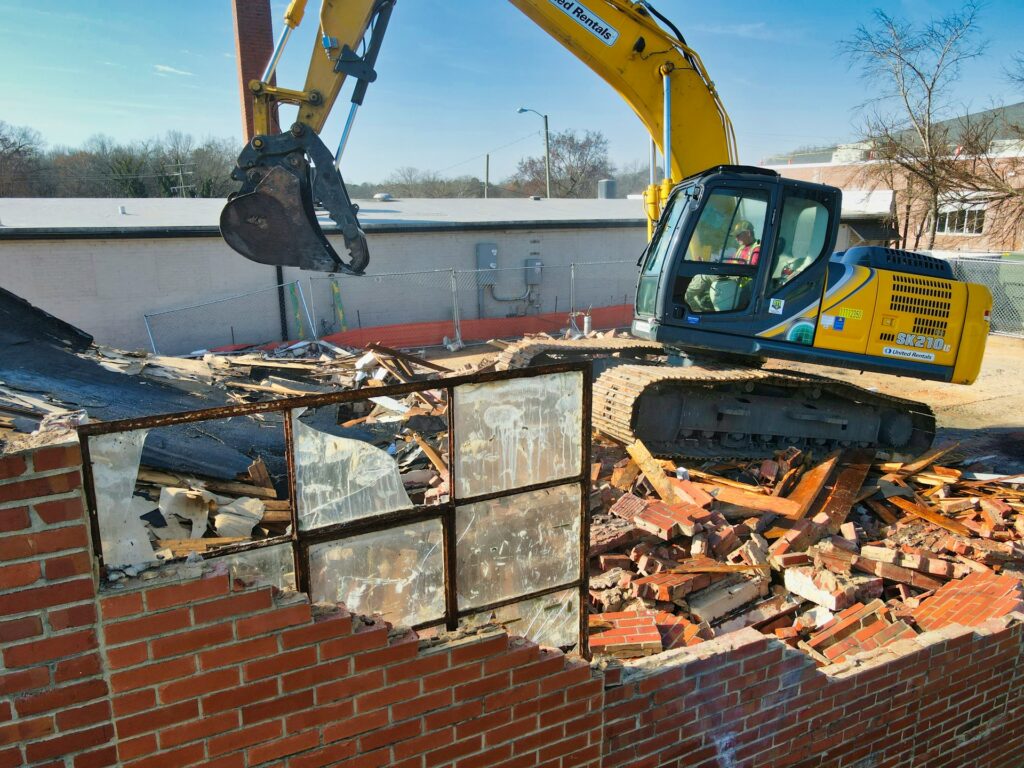
Complete demolition is about tearing down entire structures. But there’s a lot more to it than just breaking walls and floors. It’s a detailed process that demands careful planning and execution. Demolition crews not only bring down buildings but also help pave the way for new beginnings on the same ground. This makes demolition a key part of urban development and renewal. Despite its significant role in construction, demolition doesn’t stop at making room for new structures. It’s equally important to consider what tearing down a building means for the environment.
Understanding the environmental impact of demolition can alter how we view the whole process. Each act of destruction can have lasting ecological effects. It’s not just about the dust clouds or the noise; it’s about what happens after the dust settles. Knowing how demolition affects the surrounding area helps everyone plan the work more carefully.
Understanding Complete Demolition
When we talk about complete demolition, we refer to the total tearing down of a building or structure. This process involves a systematic approach. First, experts assess the building to plan how to bring it down safely. They analyze structure, materials, and surrounding areas to understand potential challenges. Once they have a plan, crews use a mix of heavy machinery and controlled techniques to ensure safety. Equipment like wrecking balls, bulldozers, and high-reach excavators often play a big role in this process. These machines make it possible to bring down large buildings efficiently.
A demolition project isn’t as simple as swinging a wrecking ball. Every building poses different challenges. Teams must ensure the safety of workers and people nearby. They must navigate power lines, underground pipes, and nearby structures. This means each demolition requires a detailed plan, ensuring risks are minimized.
While the idea of tearing down entire buildings might seem straightforward, each project is unique due to the diverse methods and machinery used. Managing the debris is another big task. This is where the importance of demolition expertise comes into play. A professional service ensures safety and efficiency, all while giving thought to environmental concerns. Understanding these processes highlights the skill and organization required to complete a demolition effectively and responsibly.
Environmental Impact of Demolition
– Waste Generation: Demolition generates a significant amount of waste, including concrete, wood, and metals. Hauling it off and disposing of it properly is crucial to reduce environmental harm.
– Air and Noise Pollution: During demolition, dust and debris can create air quality issues for surrounding areas. Noise pollution is also a concern, affecting local communities and wildlife.
– Impact on Ecosystems: The demolition process can disturb local ecosystems. Plants and animals may be displaced, and local water sources can become contaminated if not properly managed.
In looking at the bigger picture, it’s clear that demolition doesn’t just shake the ground it stands on; it ripples outward to touch many aspects of our environment. Understanding these impacts encourages a thoughtful approach to demolition, guiding communities toward more responsible practices. Opting for less invasive methods and being conscious of the aftermath can make a big difference in the environmental footprint.
Reducing Environmental Impact During Demolition
Reducing the environmental impact of demolition starts with planning. Choosing the right method, controlling dust and runoff, and hauling debris to properly permitted disposal sites all help protect the surrounding area.
Techniques to Minimize Impact:
– Deconstruction: Taking a structure apart in stages when the site or neighbors need extra care.
– Selective Demolition: Removing only the necessary parts of a building.
– Use of Non-Explosive Methods: Using controlled mechanical processes instead of explosives to minimize dust and debris.
Using equipment and processes that produce less dust and noise also helps. These practices help protect air quality and lessen the impact on nearby communities. Instead of traditional methods, innovative solutions like “silent” machinery and dust suppression techniques can offer cleaner demolition options. Furthermore, using local waste management solutions for debris cuts down on fuel use and emissions associated with transporting waste over long distances.
The Role of Professional Services
Employing professional services for demolition not only ensures the job is done correctly but also that it meets safety and environmental standards. Trained demolition experts bring valuable knowledge and skills. They understand the intricate planning required and are ready for any unexpected challenges. Professional teams come equipped with the latest technology and equipment to perform the task efficiently and safely.
Benefits of Professional Oversight:
– Comprehensive Safety Measures: Professionals follow stringent safety protocols to protect workers and the surrounding area.
– Environmental Compliance: Ensures adherence to environmental regulations and standards.
– Site Restoration: Clearing and preparing the site for future development.
Using professional services means you not only protect the immediate area but also the larger community. With their knowledge, they can reduce risks and keep the work in line with local regulations. This support is instrumental in handling unexpected situations that could arise during a project, reinforcing both safety and efficiency.
Making Informed Decisions for Your Project
When choosing demolition services, making informed decisions is crucial. Before selecting a contractor, consider their experience and how they handle the environmental aspects of demolition. Ask potential contractors about their methods and strategies for waste management. Understanding what techniques they use to minimize environmental impact is essential.
Key Questions to Ask:
– Where does the debris go, and how is it disposed of?
– How do you control dust, noise and runoff during demolition?
– Can you provide examples of past projects with positive environmental outcomes?
Being proactive in your choice can lead to better project outcomes and ensure that your demolition project aligns with environmentally friendly goals. Think about the long-term effects your project could have and aim for choices that limit harm to the surrounding area. This approach helps preserve the environment and supports the well-being of your community.
Final Thoughts on Demolition’s Environmental Impact
In considering demolition’s impact, it’s important to weigh both the short-term gains and the long-term environmental consequences. Careful planning, the expertise of professional services, and informed decision-making all play significant roles in minimizing harm. Choosing cleaner, well-managed demolition methods reflects a commitment to responsible development.
If you want your next build to start off on the right foot, consider how using complete demolition methods can clear the way for your project. McMichael Waste Services handles demolition and debris hauling so your site is ready for what’s next.